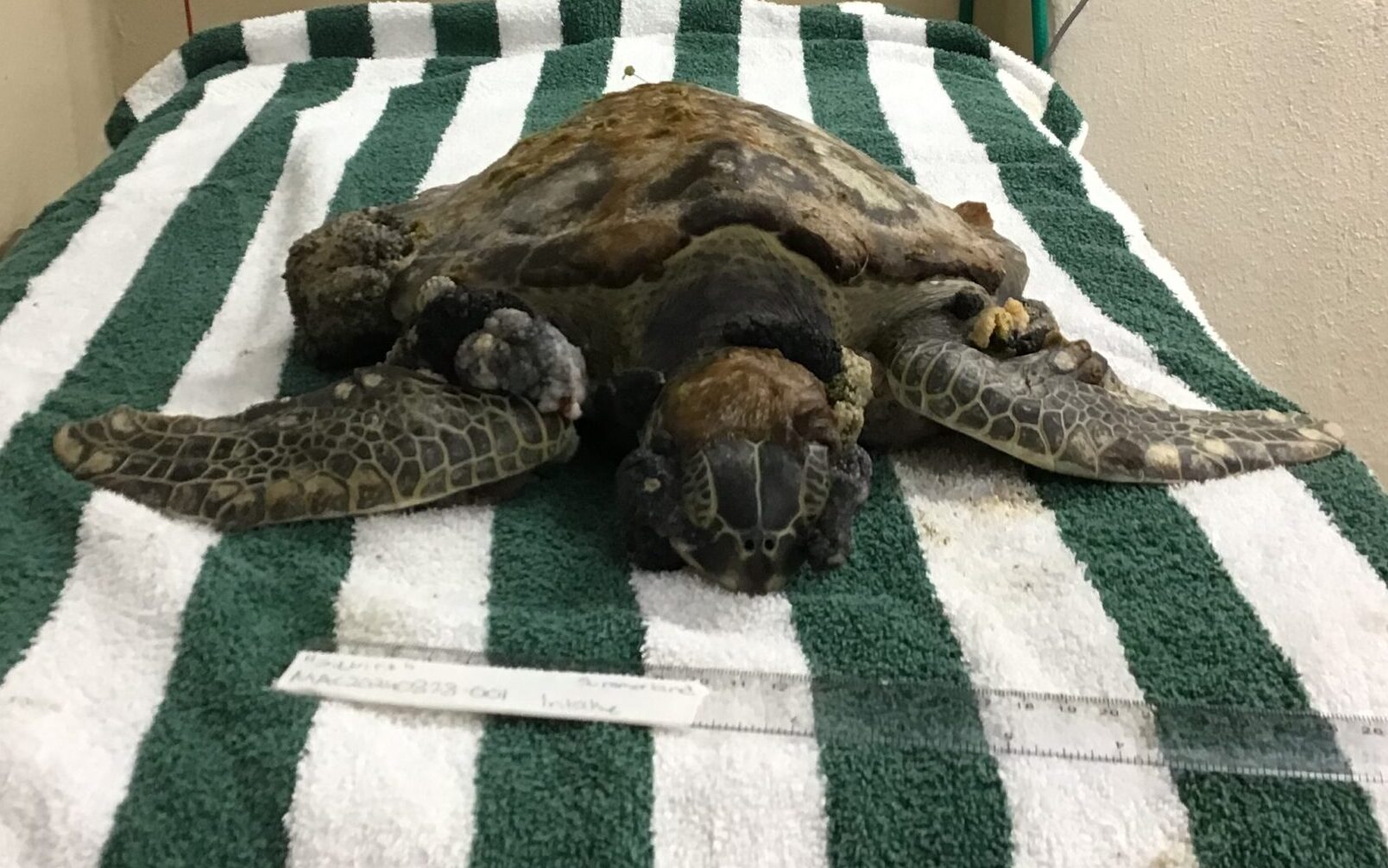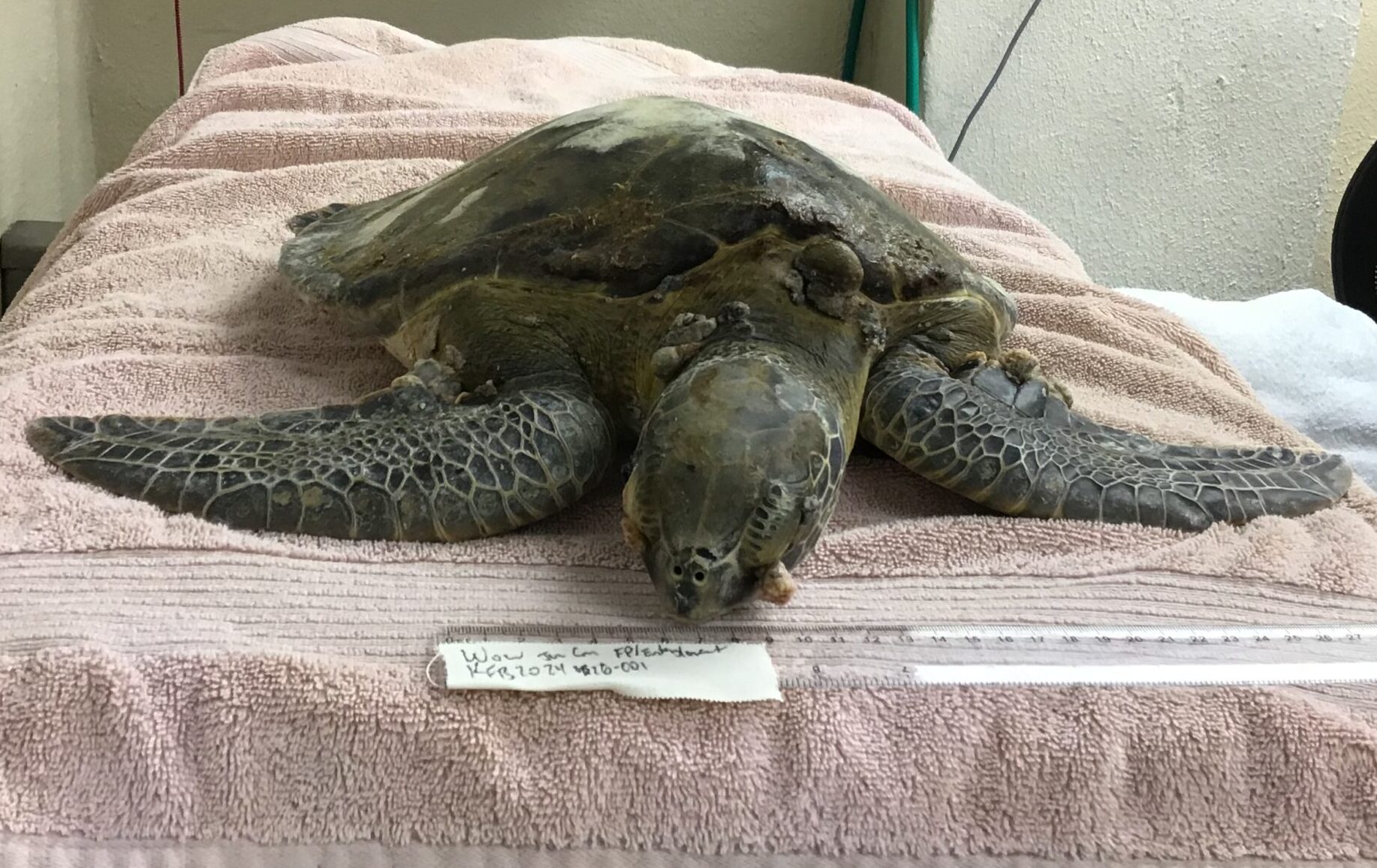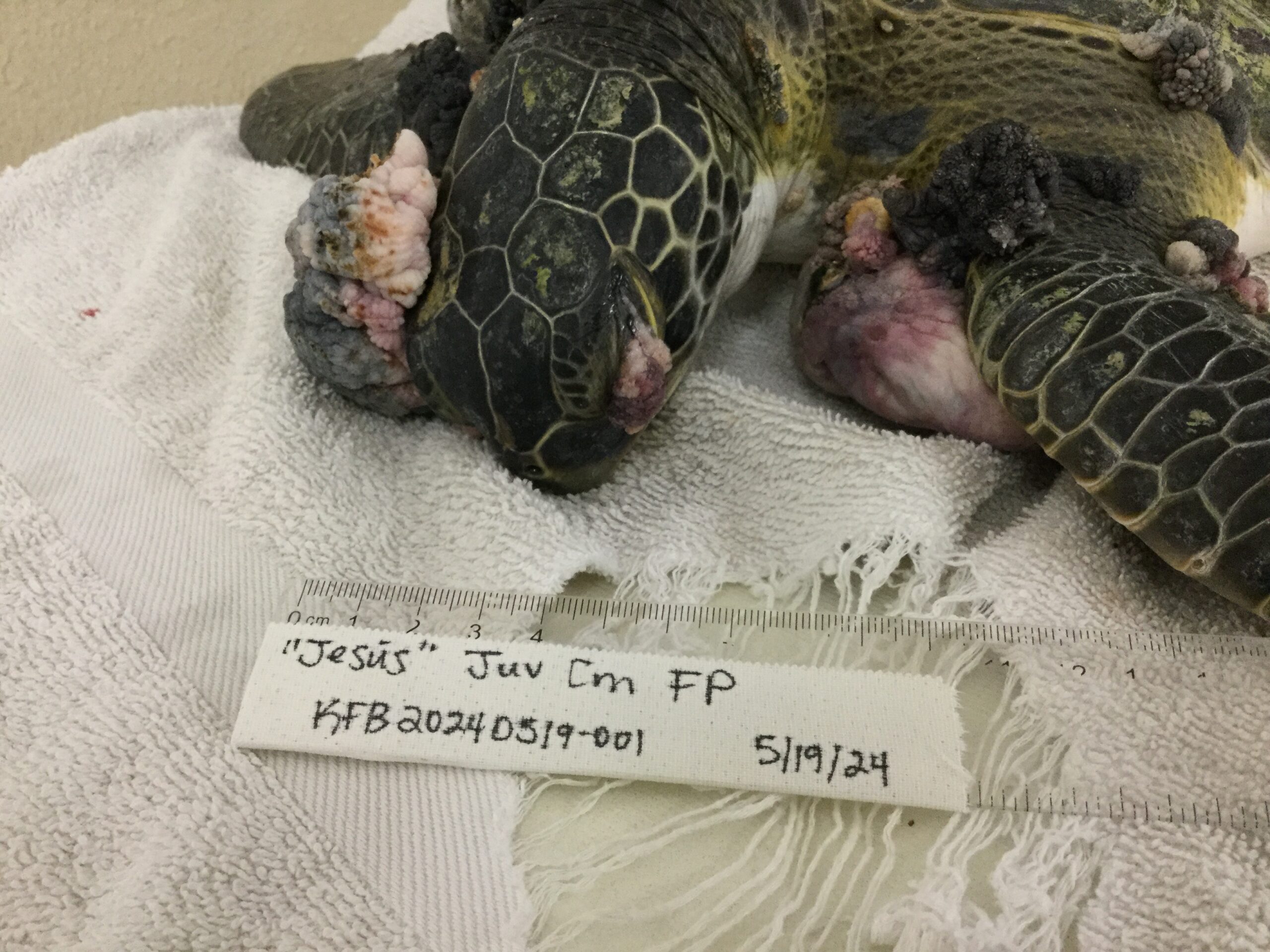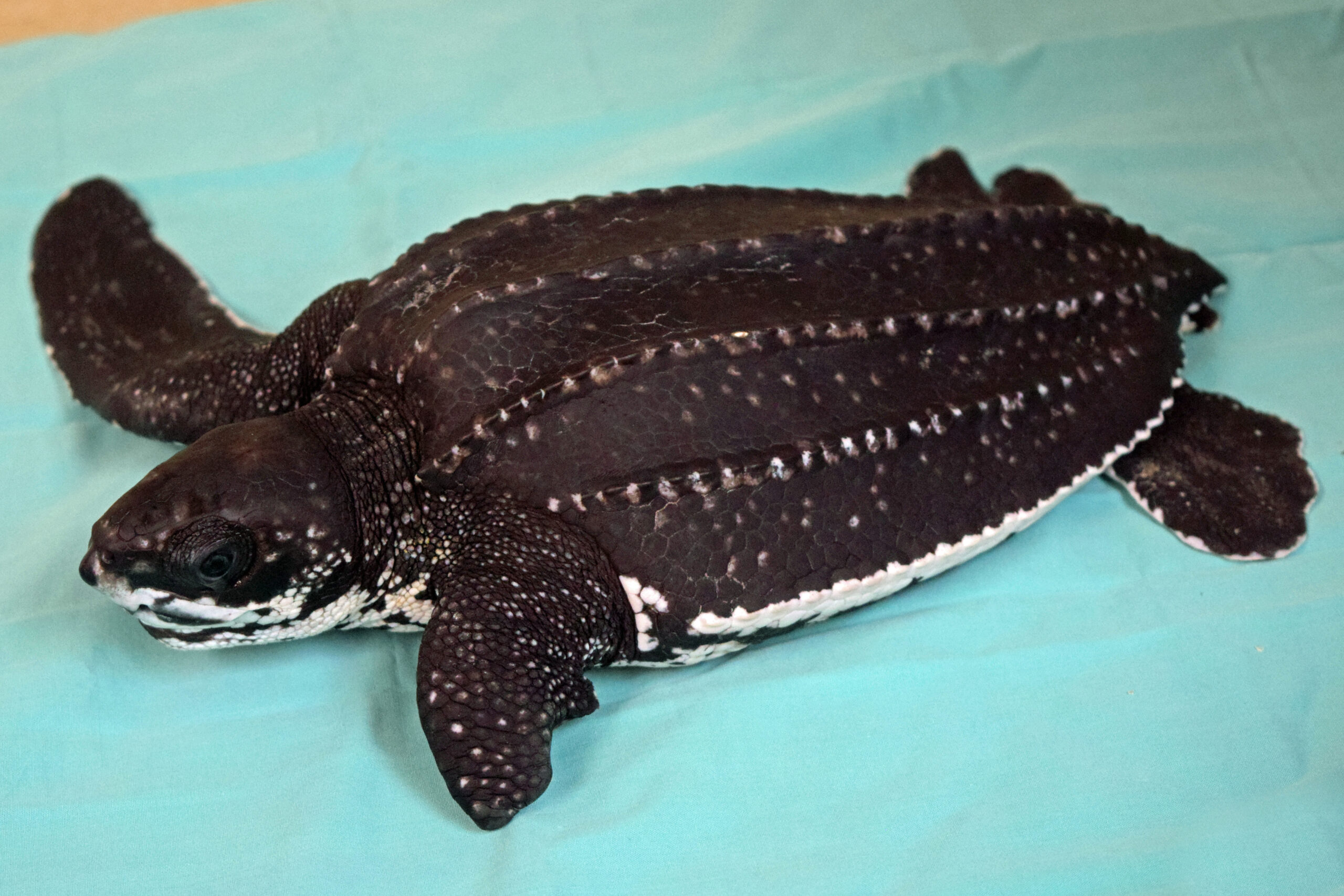

The Turtle Hospital recently received a grant from the Sea Turtle Conservancy for the purchase of two large treatment tanks.

The 1500 gallon fiberglass tanks will be used for large animals that are undergoing rehabilitation. The 16 feet length of the tanks allow turtles to swim and move around. Staff are able to easily drain the water to allow injections and medical procedures.

Thanks to the Sea Turtle Conservancy and everyone who has purchased the Florida Sea Turtle license plate which contributes to the funding for grants.

Whit's End

On Tuesday May 25, 2010 almost 3 years after being admitted to the Turtle Hospital, Whit’s End is moving to The World Aquarium in St. Louis, Missouri to work as an ambassador for Green sea turtle species.  She will be educating the public on the importance of saving our oceans, taking care of our wildlife, and demonstrating human impacts on sea turtle species. Bubble Butt Syndrome has caused Whit’s End inability to be released back into the wild. During her time at the hospital Whit’s End adjusted to new life with weights epoxied to her shell to help her dive, and gained 9 pounds!

So if you’re ever in St. Louis stop by and say hello to a friend of ours!

2010 has been an incredibly difficult year for The Turtle Hospital and Florida’s wildlife. In January, when temperatures plummeted into the thirty’s, 5,000 sea turtles stranded throughout the state. Of those, 188 were rescued and treated at The Turtle Hospital. The Turtle Hospital has recovered from the cold stun crisis, but with the impending hurricane season almost upon us, the Gulf of Mexico oil spill has potential to  cause more damage than anything the hospital has faced in the past.

In preparation for the worst, emergency tanks (used during hurricanes and during the cold stun) are being tested. The seawater that feeds the treatment tanks and saltwater pool inside the enclosure is pulled directly from the bay. If oil contaminates the bay there will be no access to outside seawater or circulation inside the enclosure for our patients. Therefore, for the animal’s safety, the sea turtles will have to be moved into two 36,000 gallon hurricane relief tanks located behind the hospital. These tanks can be filled with seawater directly from the bay, but once a valve is closed the tanks operate on a closed recirculating system. Large sumps and protein skimmers clean and filter the water. Patients that are seriously sick or injured will be moved inside the hospital where they can be monitored and treated.

Exxon
(Pictured Above: Exxon, a post hatchling Green sea turtle, was rescued December 28th 2008 found covered in oil. Mayonnaise was used to remove the oil and Exxon was eventually released.)

If the oil spill reaches the Florida Keys, The Turtle Hospital will be prepared to assist the community and local wildlife. Items necessary to clean and remove oil, such as Mayonnaise and Dawn soap, are being purchased to respond to any sea turtles or other marine life affected by the oil. Mayonnaise is safe, non-toxic and effective in cleaning sea turtles coated in oil. In addition, The Turtle Hospital will also need haz-mat suits, a shade cloth for the hurricane tanks and large quantities of synthetic sea salt for mixing artificial sea water.

For those interested in volunteering their time to assist in a possible clean-up visit Keys Spill for information.

For more on how The Turtle Hospital is preparing for disaster visit: http://www.justnews.com/video/23470002/index.html

UPDATE May 29th:

Turtle Hospital staff continues to monitor the BP oil spill and remains in contact with DEP (Department of Environmental Protection), BP (British Petroleum) and FWC (Florida Fish and Wildlife.) For now forecasts state that a light sheen of oil is near the loop current but should dissipate before reaching our coasts. All staff members of The Turtle Hospital have taken the required courses for post oil clean up and continue to remain on high alert. No sea turtles in Florida Keys waters have been reported injured from oil contamination. For now we encourage travelers to visit the Florida Keys and we continue to offer our daily guided educational programs of The Turtle Hospital at 10am, 1pm and 4pm daily.

For updates and daily trajectories visit: http://response.restoration.noaa.gov/topic_subtopic_entry.php?RECORD_KEY(entry_subtopic_topic)=entry_id,subtopic_id,topic_id&entry_id(entry_subtopic_topic)=809&subtopic_id(entry_subtopic_topic)=2&topic_id(entry_subtopic_topic)=1

UPDATE 09/01/2010

urtle Hospital staff continues to monitor the BP oil spill and remains in contact with Department of Environmental Protection (DEP), British Petroleum (BP) and Florida Fish and Wildlife (FWC). There are currently NO reported signs of oil in Keys waters and no sea turtles have been contaminated by oil in the keys. The Turtle Hospital does not have any patients in treatment currently due to oil.

To date, nearly 700 sea turtles have lost their lives due to oil contamination, of those nearly 80% were critically endangered Kemp’s Ridleys. However, groups like Inwater Research Group, a non-profit sea turtle research organization, have successfully rescued 509 live sea turtles which have been taken to rehabilitation facilities like the Audubon Aquarium in Louisiana.

Here are some current statistics from Inwater:

Turtle                                      Species                 Alive       *Dead      Total
Green turtle                       (Chelonia mydas)          169          23          192
Hawksbill turtle             (Eretmochelys imbricata)     15            1           16
Kemp’s ridley turtle         (Lepidochelys kempii)       305          412         717
Loggerhead turtle                (Caretta caretta)            20           51          71
Unknown turtle species                                            0           39          39
TOTAL                                                                 509          526        1035

* These are turtles that we found offshore near the spill site as of 8/16/10.

They are still currently looking for impaired sea turtles in offshore areas out of Destin, FL and Orange Beach, AL with NOAA and Unified Command.

For more information visit Inwater at: Inwater

Currently as we prepare our facility, we continue to keep our thoughts with the wildlife that is being affected by this disaster in the gulf.

For now we encourage travelers to visit the beautiful Florida Keys and we continue to offer our daily guided educational programs of The Turtle Hospital at 10am, 1pm and 4pm daily.

Visit Keys Spill for more on how you can become a certified oil-spill clean-up volunteer and stay updated on current information as it becomes available.

For more information and for daily trajectories visit: NOAA

banner.jpg
(click above to visit the store)

The Turtle Hospital is happy to announce
the grand opening of our online store!

You can order a famous Turtle Hospital T-shirt,
choose from dozens of sea turtle gifts,
and even adopt a sea turtle!

WWW.TURTLEHOSPITALSTORE.COM

The Turtle Hospital is a non-profit organization dedicated solely to the rescue, rehabilitation and release of one of our most endangered marine creatures…but we do need your help. Each turtle treated at the hospital is extremely important to the population and every dollar you spend gets them that much closer to returning home. We are funded primarily by the interest and generosity of people like you.
100% of the proceeds go directly to the care of the turtles.

yhst-63241665324336_2007_3757910.gif yhst-63241665324336_2006_1066781.gif 1.gif 2.gif
(click any of the above to visit the store)

The Turtle Hospital is a non-profit 501c(3) charitable organization.

Receive Our Monthly E-mail Newsletter!

» CLICK HERE TO SIGN-UP!

Announcing The Monthly Turtle Hospital E-mail Newsletter !!

Keep up on all the latest news, events and everything going on at the Hospital and in the world of sea turtle conservation. The hospital newsletter will also highlight new, interesting patients and which turtles have been released back into the wild! View exclusive photos and movies, too! To receive Turtle Hospital news in your mailbox once a month, click on the icon above!

turtleonthecomputer.jpg
~~You will not receive anything other than our email newsletter once a month. We will not sell, lease or trade your information with any entity other than our newsletter manager (ConstantContact, Inc).To read their privacy policy, click here: Privacy Policy.~~

Aug 23, 2008

The Turtle Hospital responded to a call from a resident of Ocean Resort on Long Key who reported seeing a number of hatchling turtles in the road (US1) the previous night. Staff picked up 4 Loggerhead hatchlings from the resident and received the location information.

dscn2961e.JPG

At mile marker 66 (West end of Long Key), twenty hatchlings were found that had been run over by cars.

As the scene was being documented, the resort day watchman found another live hatchling and the night watch man stopped by to report that someone had picked up and released approximately 20 to 30 hatchlings they collected from the roadway (the previous night). The nest was located (another live hatchling found during inventory) and a probable light source that caused the disorientation was identified. (Lighting in the area of a hatching nest can cause the emerging turtles to head towards the light instead of the ocean). All hatchling disorientations are documented to the FWC and problems with light sources visible from nesting beaches, are turned over to City or County code enforcement for correction.

dscn2998e1.JPG 

Turtle Hospital staff Tara Vickrey with one of the lucky hatchlings.

Aug 20, 2008

Earlier this week, Marathon was affected by tropical storm Fay. While it did not reach hurricane level there was quite a bit of rain and high winds in the area. The winds were strong enough to damage the shade cloth which covers the pool and tank enclosure at the Turtle Hospital.

dscn2950e.JPG

The Turtle Hospital has a hurricane plan that was put into action. In addition to the normal preparations like putting up shutters and placing lawn furniture inside, steps are taken to ensure the safety of the turtles in our care. During hurricane Wilma in 2005, the enclosure area where the 100,000 gallon salt water pool and 26 large tanks are, was under 6 feet of water due to the storm surge. Fortunately, none of the turtles that were in the pool during the storm were lost or hurt (the smaller turtles from the tanks were moved into the hospital and dry docked in kiddie pools).

Last year, thanks to a generous grant from the U.S. Fish and Wildlife Service, we had two 30 foot diameter, 26,000 gallon fiberglass tanks installed behind the hospital. Each tank has sand filters, protein skimmers and ozone generators, being able to operate as either a closed or open system. Gasoline pumps fill the tanks from the Gulf and can be used in case of extended power outages. This provides the ability to remove all the turtles from the enclosure area and provide safe housing during a storm.

dscn2909e.JPG

Prior to Fay’s arrival, staff moved all of the turtles from the pool into the tanks. This was the first time the new tanks have contained turtles and was good practice, providing a number of lessons learned. The added bonus was having the permanent resident turtles already being handled so all of them got a physical.

dscn2906e.JPG

Aug 8 2008

Two juvenile Green Sea Turtles arrived today at their new home in Connecticut. The turtles were hatched from eggs and had been used for research for the past 4 years, to provide baseline information in the study of the transmission of fibropapilloma. The small turtles are healthy and active but could not be released as they had never been in the wild. The Maritime Aquarium in Norwalk will house the turtles in a 30,000 tank as part of an educational exhibit.

rle.JPG

Turtle Hospital director, Richie Moretti accompanied the turtle on a Fed Ex flight from Ft Lauderdale to New Jersey. The turtles were transported out of water and required on going care to keep their eyes lubricated and shells moistened.

Boat Hit Season

Summertime in the Keys. Vacationers out in their boats fishing, diving, doing whatever. Lobster mini season (thousands more boaters). Start of commercial lobster season (more, large boats out every day). The results are a dramatic increase of the number of sea turtles that are injured and killed. In the past week alone, the Turtle Hospital has picked up two live turtles (that subsequently died of their injuries),

dscn2698e.JPG

dscn2731e.JPG

one fresh dead

dscn2824e.JPG 

 and did reports on 4 others that were called in from the Marathon area. This is only part of the number killed statewide.

Boaters should obey the No Wake zones in canals and channels (where turtles and boats are squeezed together) and be aware there are more adult turtles in the near offshore waters due to nesting season. Slowing down improves response time and has added benefit of using less gas…

Aug 2, 2008

Each year during turtle nesting season, the Turtle Hospital cares for a number of hatchlings. These are the ones that become disorientated due to lighting in the area of the nest, that become entangled in vegetation, don’t make it out of the nest (found during inventory of the nest), are injured by animal / insect attack or are washed back to shore. Nesting beaches in the Keys are monitored by a network of volunteers, Park staff and others that walk the beaches daily to identify nesting crawls that occurred the previous night. Nests are marked, monitored and inventoried after hatching.

Hatchlings brought to the Turtle Hospital are placed in tanks and offered food (pieces of squid tentacles and small bits of shrimp). Once the hatchlings start eating, they are ready for release.

After emerging from the nest, hatchlings would normally swim to the Sargassum sea weed patches that are prevalent off shore this time of year. The ones in our care are given a boat ride out to the sea weed patches to ensure they have a good chance to survive (birds and fish are always on the look out for a quick and easy snack).

turtles-234e.JPG

A group of Loggerhead hatchlings were released yesterday. Pictured below is Holly Rolls who is one of the beach monitors for Sombrero and Coco Plum beaches in Marathon. Holly brought in several of the hatchlings (found during inventory of nests she identified) and had the opportunity to see the babies off to start their life in the ocean.

turtles-229e.JPG

July 14, 2008

donation-with-samantha-e.JPG

Presenting a check to The Turtle Hospital for $237 is Samantha Tennick, President of the Marine Science Club at Richard Stockton College in Pomona, NJ. Samantha and and the 10 members of the Marine Science Club made this very generous donation after holding a fundraiser for The Turtle Hospital. The group sold items related to sea turtles such as pens, key chains, and jewelry. The group recently traveled to the Florida Keys to learn more about Keys ecology and wildlife, including sea turtles. Thank you Samantha and your entire team for such hard work and dedication. It is caring people like you that allow us to operate at the level that we do and to help save sea turtles for future generations.

July 6, 2008

Vincent Fimiani (age 7) of Marathon recently had a project in school which was to finish a story that starts with “Today, I found $100 at the playground and I decided to …” In addition to giving food to the poor, Vincent also listed helping the Turtle Hospital. Going beyond the school project, he started a collection and today stopped by to donate the money he saved.

dscn2466e.JPG

Much thanks Vincent and as your teacher noted on your story work sheet, “You are a delightful boy!

The 11 th annual Key West Classic Paddleboard Race was recently held, where contestants compete to paddle around Key West (a 12 mile course) in the fastest time. Michael Westenberger entered the race and decided to pledge any winnings to 3 local Key’s charities, The Turtle Hospital, Key West Wildlife Rescue and Green Living and Energy Education.

“Westy” placed second in the race and provided a third of his $2000 winnings to help save Sea Turtles in the Florida Keys!

dscn2281e.JPG

Ryan Schrafflenberger from Captain Hook’s Dive Center in Marathon recently rescued an injured Sea Turtle and decided to further help the species by organizing a fund raiser to provide assistance to the Turtle Hospital ( a 501 (c) (3) charitable corporation). Captain Hook’s with contributions from Frosty’s and Budweiser hosted the first annual Charity Chicken Wing Eating Contest for Turtles.

th-fundraiser-1e.JPG

Twelve teams of four persons competed to put away 75 chicken wings, 15 sliders and two pitchers of beer in the shortest time. The winning time of 14 minutes and 5 seconds was achieved by the team from Captain Hook’s. Florida Keys Dive Center (Tavernier) took second and Sparadeo Lawn Service (Marathon) came in third.

dscn2279e.JPG

The event raised over a thousand dollars, which will help fund food and medications for the patients currently at the Turtle Hospital.

The Florida Keys Sea Turtle nesting season is in full swing. Officially starting on April 15 (running through Oct 31) there have been a number of nests identified and several that have already hatched. Save-A-Turtle coordinates the monitoring of beaches in the Keys, hosting annual training sessions by the FWC and scheduling daily “beach walks” by volunteers. Each year the Turtle Hospital receives hundreds of hatchlings that became disorientated due to improper lighting in the area, ones that did not make it out of the nest (found when nest is inventoried after hatching), hatchlings that got trapped or tangled in vegetation or trash on the beach and others that were attached by birds, crabs ants etc. The baby turtles are placed in special “hatchling tanks” where they are monitored and fed. Once the hatchlings are eating on their own (finely cut squid tentacles), staff will take them out to the Gulf Stream and place them in patches of Sargassum seaweed which is where they would normally swim to. Hatchlings that do not eat on their own or that have other physical problems are held and treated until being releasable.

img_2190e.JPG

Two hatchlings from a nest on Sombrero Beach in Marathon, currently in our care.

On May 18, 2008 the annual Super Powerboat Grand Prix was held in the area waters in Marathon.

dscn1526e.JPG

To ensure the boats (which can reach speeds in excess of 100 mph), don’t harm Sea Turtles or Marine Mammals, the Turtle Hospital coordinates inspection and monitoring of the race course by helicopter before, during and after the event. The “spotters” in the helo have the ability to hover over an animal on the race course (alerting and diverting the boat operators) or even stopping the race. The spotters are staff from the Turtle Hospital and Dolphin Research Center. The use of helicopters to keep the species safe has been employed for the last seven years and is also utilized during the Key West boat races.

helo.jpg

Pictured above are Turtle Hospital  Administrator, Ryan Butts and Turtle Hospital Education Coordinator Pat Thomson.

banner.jpg
(click above to visit the store)

The Turtle Hospital is happy to announce
the grand opening of our online store!

You can order a famous Turtle Hospital T-shirt,
choose from dozens of sea turtle gifts,
and even adopt a sea turtle!

WWW.TURTLEHOSPITALSTORE.COM

The Turtle Hospital is a non-profit organization dedicated solely to the rescue, rehabilitation and release of one of our most endangered marine creatures…but we do need your help. Each turtle treated at the hospital is extremely important to the population and every dollar you spend gets them that much closer to returning home. We are funded primarily by the interest and generosity of people like you.
100% of the proceeds go directly to the care of the turtles.

yhst-63241665324336_2007_3757910.gif yhst-63241665324336_2006_1066781.gif 1.gif 2.gif
(click any of the above to visit the store)

The Turtle Hospital is a non-profit 501c(3) charitable organization.

Mare TV, a popular German television program and educational magazine, recently spent a day at The Turtle Hospital learning about sea turtles in the Florida Keys. The Program will help promote sea turtle and marine conservation throughout Europe, as well as offer a glimpse of what life if like for people who live and work in the Keys. Pictured below are crew members from Mare TV and Turtle Hospital employees, Tom Luebke and Ryan Butts, holding Randy Rudy, a Hawksbill sea turtle.

dscn0054.JPG

“Shelly” a juvenile Green Sea Turtle was rescued from a canal in Key West on Dec 30, 2007. Reported “floating” by local residents, this turtle has severe Fibropapilloma tumors and a large fish hook in the lower intestine. Dr. Doug Mader with staff from the Marathon Veterinary Hospital and Turtle Hospital staff  performed several surgical procedures. An endoscopic inspection was done to look for internal tumors. This procedure inserts a video camera into the body cavity to allow inspection of the internal organs. Fortunately, no internal tumors were found. The fish hook (found by X-ray) was successfully removed. Laser surgery was performed to remove tumors from the eyes and front flippers. Due to the number of tumors, Shelly will return for at least two more surgery sessions. Shelly will remain in our care for a year after the last surgery to ensure no re-growth of tumors. 

 dscn0399e.JPG

Richie Moretti, founder and director of The Turtle Hospital, recently received the prestigious IFAW Animal Action Award. The award, given on behalf of the International Fund for Animal Welfare (IFAW), was presented to Mr. Moretti on October 4th, 2007, in Santa Monica, California. The award is granted to animal advocates who passionately work to protect animals and their habitats. Since the hospital’s inception in 1986, Mr. Moretti’s diligent work has resulted in over 1000 sea turtles successfully rehabilitated and released back into the wild.

In addition to the award itself, Mr. Moretti and The Turtle Hospital were featured on the television show Animal Rescue hosted by Alex Paen on Animal Planet Network.

We, the staff at The Turtle Hospital, would like to congratulate Richie, and thank you, the public, for helping to make his dream a reality.

get-attachment.jpg

Pictured Above: IFAW President, Fred O’Regan and Hospital Director, Richie Moretti (right).

« Articoli Precedenti    
The Turtle Hospital is based on WordPress platform, based on a design by Gx3.